Reflection on Community Connection
Blog post description.
Iggy Infinity
5/23/20264 min read


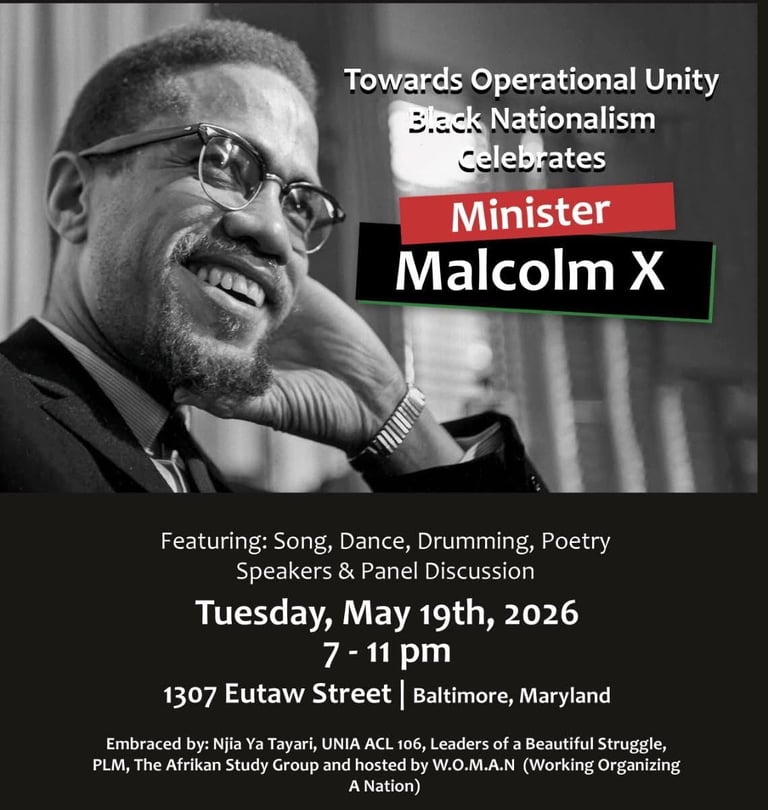
African Liberation Day being disrupted by weather left me with time to reflect on the strength and the growing pains of community organizing today. While I was disappointed to miss the weekend gathering itself, I realized the conversation I had really been searching for had already happened days earlier during a cross-organizational panel discussion on the 19th
My perspective comes from only the final portion of the discussion and conversations afterward, but even in that short window the message felt clear: we cannot afford to get stuck where we are.
What I heard was that the struggle for resource allocation remains one of the heaviest burdens on people doing real work on the ground. I heard that the fight for civic rights exists on multiple fronts at once: housing, education, violence prevention, food access, political representation, economic development, and cultural preservation all intersecting whether we acknowledge it or not. I heard that many of the movements of the past have evolved into the nonprofit structures of today.
That evolution is not automatically negative. Institutions bring continuity, reach, and the ability to sustain work beyond moments of protest. But they also introduce new pressures. Organizations now compete for grants, visibility, partnerships, volunteers, and public attention while often attempting to solve overlapping problems in the same communities. Sometimes groups working toward the same liberation begin operating more like neighboring storefronts than coordinated forces.
What stood out to me, though, was that the room itself did not feel divided. The conversations felt current. Honest. The barriers between sectors and approaches seemed thinner than people often assume from the outside. Even after a long day of discussion, people stayed engaged. There was less ego than I expected and more recognition that the problems facing our communities have become too layered for isolated thinking.
For me, that realization was an aha moment. I felt like I was finally seeing the larger board instead of only individual pieces. But for many of the elders and experienced organizers in the room, the conversation felt familiar almost like revisiting a cycle they have already watched repeat itself for decades.
That matters.
It is exactly why younger people, newer organizers, independent creatives, and disconnected community members need to be in these spaces more often. Some understandings cannot be absorbed through social media clips or secondhand summaries alone. Some things require proximity to experience. What took me years of research, observation, conversations, mistakes, and revision to fully understand might be transferable in a fraction of the time if stronger bridges existed between generations.
Imagine the difference that could make over ten, twenty, or thirty years. How many repeated mistakes could be avoided? How much energy could be redirected toward building instead of relearning? How much faster could movements evolve if wisdom moved downstream more efficiently?
That same principle applies economically.
One of the biggest tensions I continue noticing in community spaces is that collaboration often still operates inside a scarcity framework. Organizations want to work together, but financial pressure quietly pushes many into competition. Everyone is trying to sustain programs, keep spaces open, compensate workers, and survive economically in systems that rarely provide stable support for grassroots work.
That is where I believe a deeper understanding of commodities and localized economics becomes important.
Every neighborhood already possesses forms of value. Skills are commodities. Trust is a commodity. Culture is a commodity. Foot traffic, food, art, transportation access, historical identity, technical knowledge, media presence, and even consistent gathering spaces all carry economic weight. The problem is not always that communities lack value. Often the issue is that value leaves faster than it circulates.
Baltimore especially has the framework to think differently because the city is already naturally divided into distinct neighborhood identities. Instead of viewing that fragmentation only as a weakness, there may also be opportunity in treating neighborhoods as interconnected mini economic centers with specialized strengths.
One area may naturally become stronger in food and agriculture initiatives. Another may become known for arts and performance infrastructure. Another for education, fabrication, wellness, technology training, youth athletics, or cooperative business development. Instead of every organization attempting to duplicate the same exact functions across the city, there could be deeper coordination around what is geographically and culturally logical for each space.
That does not mean segregation or isolation. It means interdependence with intention.
Strong economic ecosystems work through exchange. One neighborhood should not need to become everything. The goal would be creating stronger circulation between communities so resources, services, audiences, and opportunities move across Baltimore more efficiently instead of remaining disconnected in isolated pockets.
Unity cannot remain symbolic.
It cannot only exist in speeches, hashtags, or annual gatherings. Real unity eventually has to become logistical. Economic. Generational. Structural. Otherwise we will continue placing organizations beside one another without truly building together.
And despite the challenges, what gave me hope most was realizing that many people in these rooms already understand that. The conversation is happening. The question now is whether we can organize ourselves well enough to act on it before another generation finds itself restarting the same discussions from the beginning.
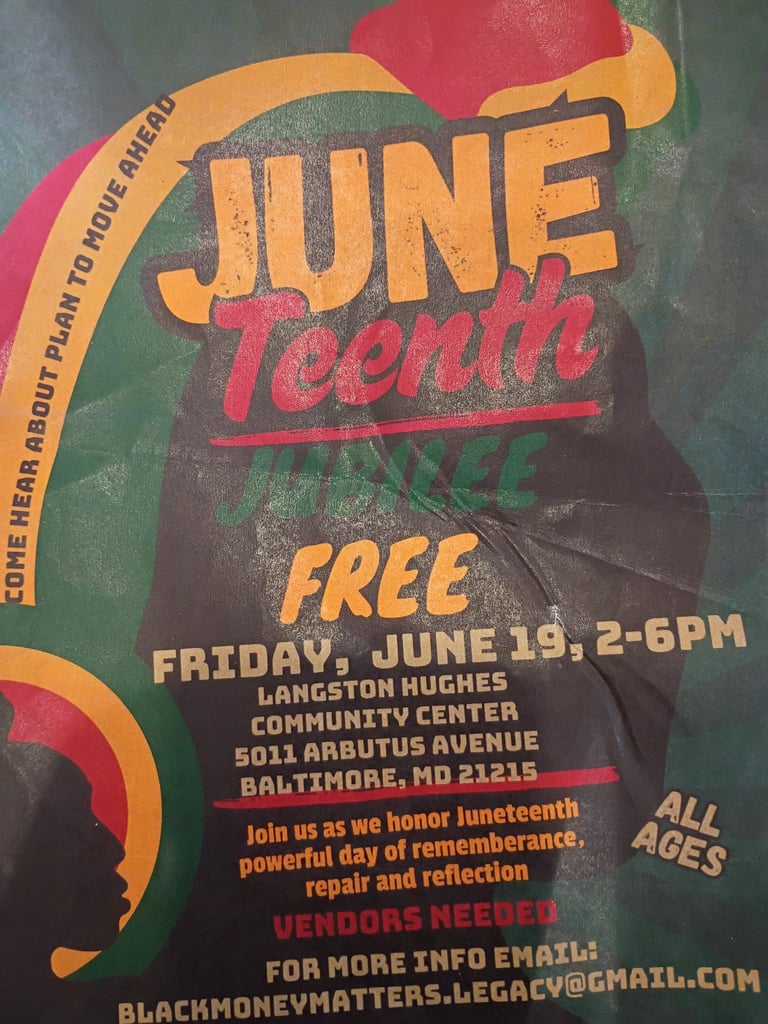
As Juneteenth approaches, I believe there are three questions worth carrying into every panel, gathering, marketplace, cookout, classroom, and strategy meeting if we truly want to move from symbolic unity into functional unity.
1. What resources already exist inside our communities that we continue overlooking?
This question pushes people to think beyond money alone. Skills, vacant spaces, trusted elders, artists, tradespeople, youth organizers, educators, local media, transportation access, cultural influence, and neighborhood networks are all forms of capital. Before constantly searching outward, communities may need to better map and organize the value already present around them.
2. How do we move from organizations working beside each other to ecosystems working with each other?
This question directly addresses the competition issue without attacking anyone personally. It opens discussion around resource-sharing, coordinated programming, neighborhood specialization, cooperative economics, and long-term planning. Baltimore already functions as a collection of distinct cultural zones. The challenge is building stronger circulation between them instead of isolated pockets of effort.
3. What knowledge must be transferred now so the next generation does not spend another twenty years relearning the same lessons?
This brings the focus back to intergenerational connection. Many younger people are willing to work, but lack proximity to strategic conversations, institutional knowledge, and historical context. Likewise, many elders carry decades of experience that never fully reaches the people coming behind them. If that bridge remains weak, progress keeps resetting itself.
freedom is not only declared. It must be organized, defended, taught, and economically sustained. The question now is whether we are willing to build structures strong enough to carry that responsibility together.