Apps, Napps, Wapps, Dapps… and Pow.
Not all apps are built the same. Today, most digital experiences fall into two major categories: native apps and web apps The difference matters, especially if you’re a creative managing large files, evolving drafts, and intellectual property.
Iggy Infinity
2/26/20265 min read


Apps, Napps, Wapps, Dapps… and Pow.
Before we get futuristic, let’s start simple.
What Is an App?
An app (short for application) is software designed to help you perform a specific function; To create, communicate, calculate, record, organize, and share. Whether you’re editing photos, tracking workouts, or recording a verse, you’re using an app.
Native Apps (Napps)
A native app is built specifically for a device operating system like iOS or Android and downloaded from trusted marketplaces such as the Apple App Store or Google Play Store. Why we trust them:
Installed directly on your device
Smooth performance
Deep system integration
Reliable offline access
Familiar distribution model
Native apps are what we grew up on. You download them. They live on your phone. They feel official.But here’s the tradeoff: They take space. And space is no small issue.
If you’re in a media field music, film, design, photography storage becomes a luxury. Every stem, every mix, every exported version, every graphic mockup adds up. Add personal apps on top of that, and your device becomes a balancing act. The average modern smartphone typically starts at 128GB of storage. That sounds like a lot until you realize: High-quality audio sessions stack quickly. 4K video files eat gigabytes in minutes. Multiple versions of one 20-track project multiply fast. Now multiply that across years of work.
Web Apps (Wapps)
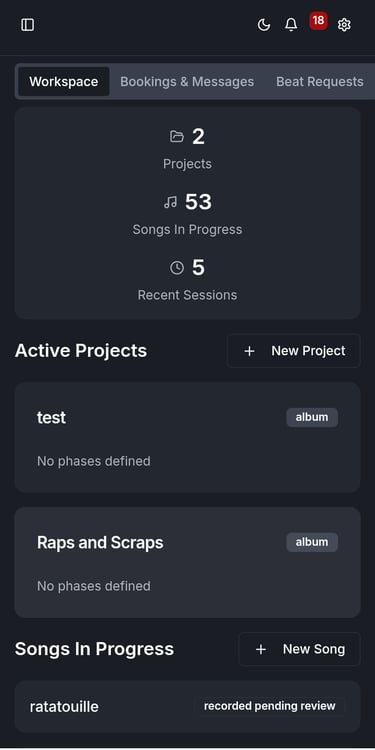
A web app runs in your browser. No app store download required.
You open it like a website, but it behaves like software. Modern web apps can: Be installed to your home screen, Send push notifications, Store local data, and Function almost identically to native app. The major advantage:
They don’t take up meaningful device storage.
Your heavy files live in the cloud. Your device remains light. You access everything from anywhere. The main limitation: Offline capabilities can be more limited than fully native apps. But for many use cases, especially creative work across distance and networks, the tradeoff makes sense. Closed Circuit launched as a web app intentionally.
1. We Understand the Space Crunch
Creatives already fight for storage space. We didn’t want access to the platform to compete with your projects. You shouldn’t have to delete a beat pack to download a creative infrastructure tool.
2. Total Catalog Organization in 3–5 Taps
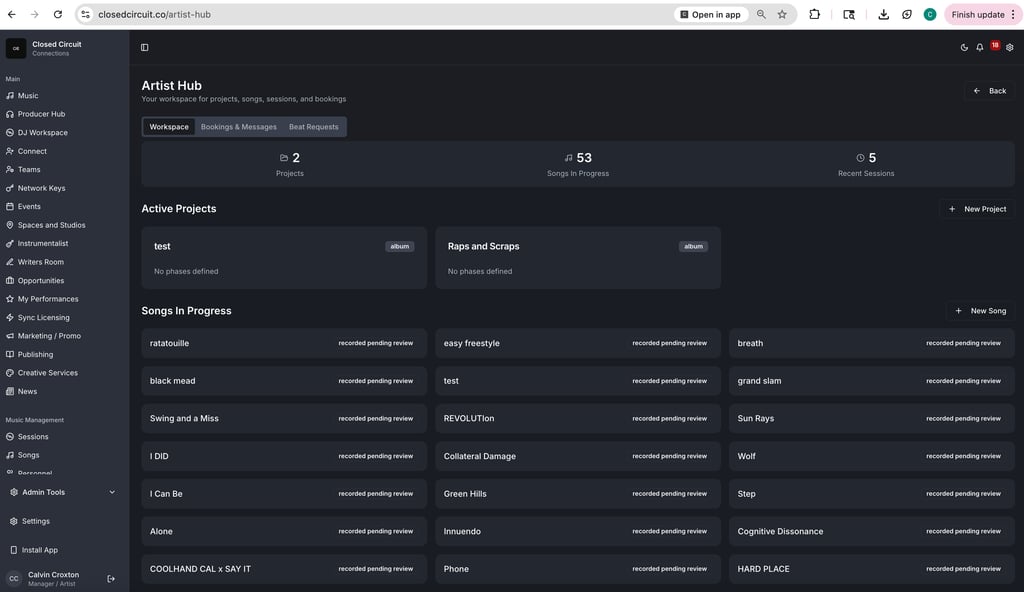
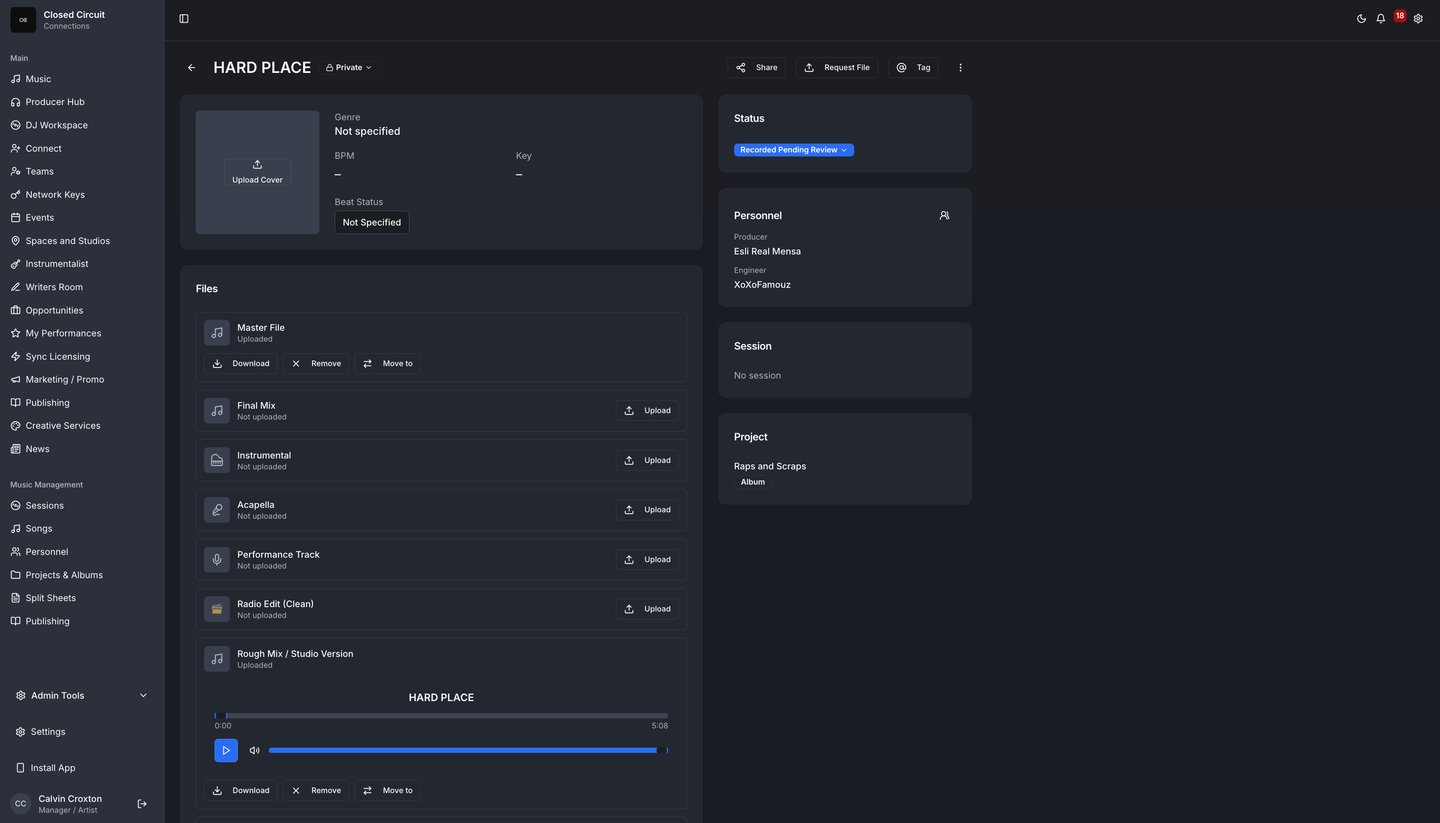
Closed Circuit isn’t just storage. It’s structured creative infrastructure. We built it so you can:
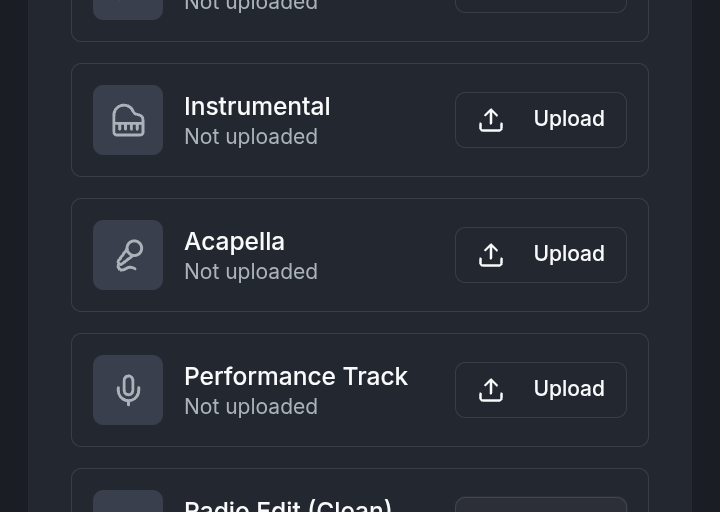
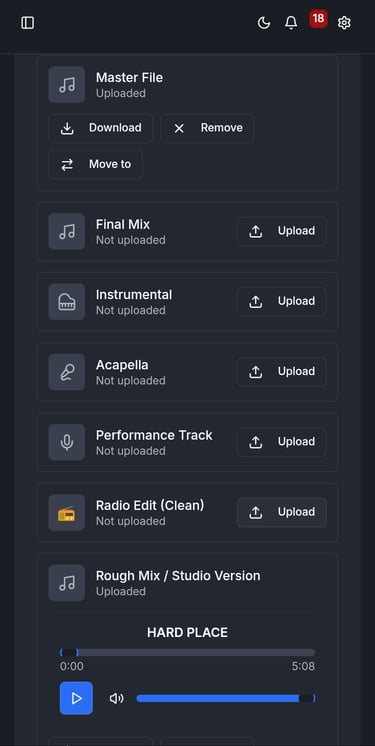
Store every version of every song
Collapse all iterations into one master entry
Attach session files, notes, splits, metadata
Assign songs to projects
Keep unfinished works visible but separate
Access events, collaborators, services, and opportunities
All from one workspace. Ask yourself...How are you currently organizing:
5 versions of the same record
A demo, rough mix, master, radio edit
Session stems
Artwork drafts
Publishing details
Split sheets
ISRCs
PRO registrations
Sure, you can use iCloud. Sure, you can send large files via Dropbox or WeTransfer. But those tools weren’t designed for collapsing creative versions into structured lineage. Closed Circuit was.
3. Sustainable Investment in the Culture
App stores typically take around 15–30% of revenue from digital purchases. By going direct-to-community through the web, we reduce marketplace tolls.
That difference isn’t trivial. It means More reinvestment into creative incentives Reward programs, Direct funding mechanisms and Cultural sustainability. Instead of feeding the marketplace, we feed the ecosystem.
Why Use It? (Pow.)
A lot can happen between the time you record a verse and the time that record is released. Files move. Collaborators change. Versions get lost. Credits shift. Metadata becomes fragmented. And sometimes ownership is questioned. When you upload a song into Closed Circuit for the first time, a cryptographic hash is generated. That hash acts as a timestamped fingerprint of the file. If needed, that hash can serve as legally admissible proof of work demonstrating that a specific version of that creation existed at a specific time. That’s Pow.
Proof of Work not in the crypto-mining sense, but in the creative sense.
Your idea
Your session
Your timestamp
Your lineage
All preserved.
And instead of juggling file transfer services or filling your phone with WAV exports, every version lives inside a structured history attached to the same song entry.
Your catalog becomes coherent not chaotic.
The Future: Dapps
Now zoom out.
Today, every website you sign up for builds its own version of you.
Ten platforms?
Ten databases.
Ten logins.
Ten redundant profiles.
In a decentralized future, that changes. With decentralized apps (dapps), your identity and data live in your own digital wallet. You register once. Then when you visit a service, you simply connect your wallet. No new database entry. No repeated signup. No fragmented metadata trail. This becomes powerful for creatives. Think about how much of your professional metadata is scattered across:
Spotify artist IDs
Broadcast Music, Inc. (BMI) publishing information
Social media platforms
Distributor dashboards
Licensing databases
None of it originated in one place. None of it moves fluidly with you.In a decentralized framework:
Your creative identity travels with you
Your works carry embedded metadata
You move between service providers without losing continuity
Your data remains portable and sovereign
You are no longer recreated at every platform.
You are referenced. That changes everything.
Where Closed Circuit Fits
Closed Circuit is positioned as a web app today. Native apps are in development because offline capability and deeper system integrations still matter. But long term the vision aligns closer to the decentralized model.
Structured catalog
Verifiable proof of work
Portable metadata
Creator-controlled identity
The web app is step one. Native support expands access. Decentralized infrastructure will expand sovereignty.
Apps.
Napps.
Wapps.
Dapps.
And Pow!?
The real question isn’t which one wins. It’s which one protects your work, preserves your process, and builds infrastructure for creative longevity.
Closed Circuit is building for that future intentionally. Closed Circuit is now entering its open beta phase, and we’re inviting aligned builders, artists, and operators to step inside. Security and culture matter here. This is not a public free-for-all. It’s a protected network designed for intentional collaboration. Access is granted only through authorized links or a verified network key to preserve trust, safeguard creative assets, and cultivate a space where people move with care. All previously distributed links and keys have been disabled to maintain integrity. If you’re reading this now, you can join the open beta for free using this authorized invite: https://closedcircuit.co/invite?code=rp8epg6gk5pyqls10jbb9m